
In the kitchen
Ground sesame or a paste works in creamy drinks and desserts. Whole seeds do not disperse like tea powder.
What to check
- Intended culinary use and actual ingredient form
- Complete ingredient list, including carriers or added sugar
- Lot number, date and storage guidance
- Origin evidence and relevant supplier testing
Label note
Sesame is an allergen. Check the label and cross-contact controls.
In the MATCHA collection
This ingredient appears in the Black blend. Refer to the finished product label for complete ingredient information.
Identify the ingredient you are actually using
Check whether the ingredient is whole seed, a ground powder, a paste or a sweetened mixture. Read all components, not only the sesame name.
When asking a supplier a question, keep the ingredient name, form and lot together. A useful answer should refer to that exact product rather than to a general botanical description. Retain the pack information when an ingredient is transferred into a preparation container.
Build a clear recipe around it
A paste can be incorporated differently from whole seeds. Choose the form your recipe requires and make the mixture evenly before assessing the final texture.
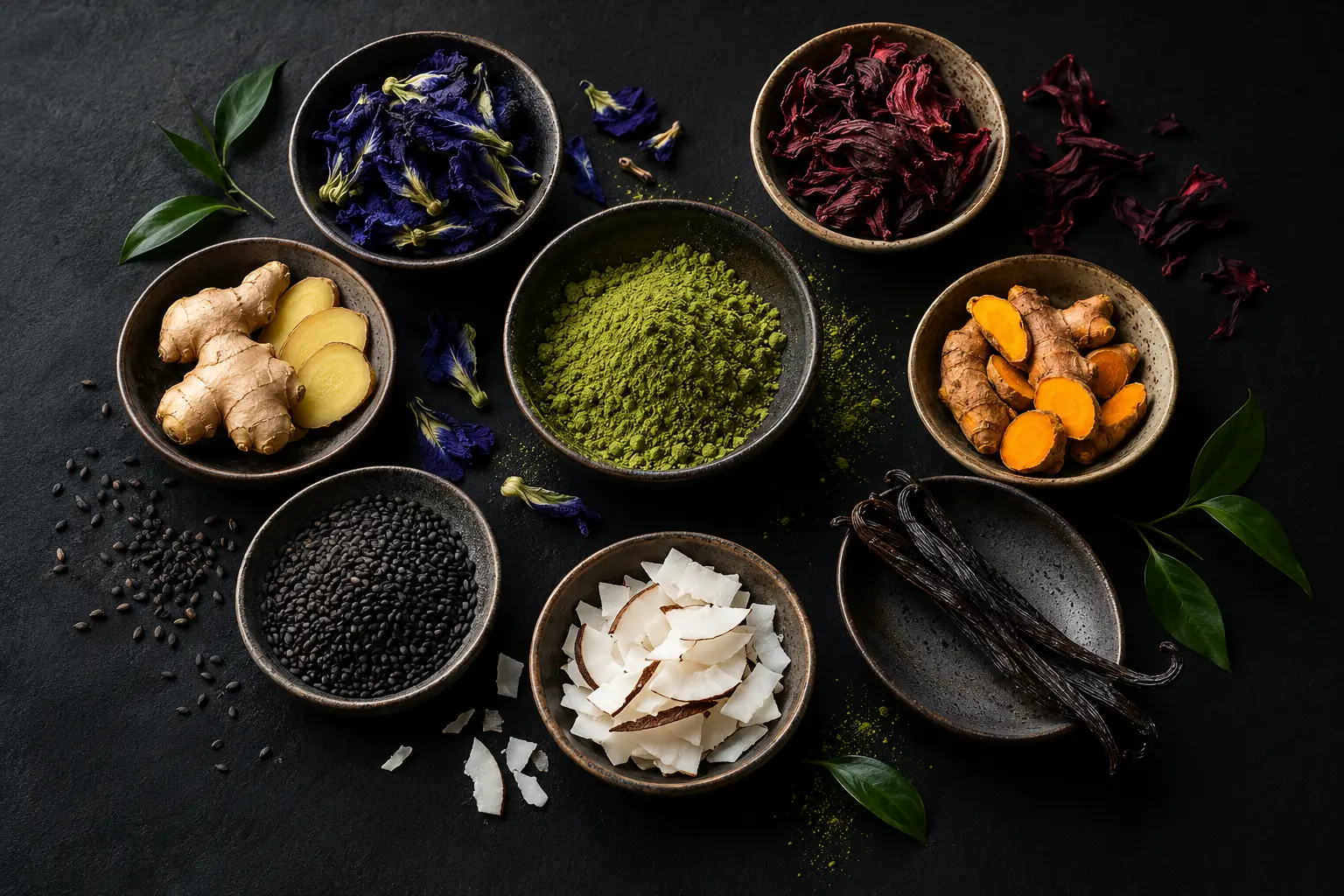
Change one component at a time and keep a short note about the result. This makes a recipe easier to repeat and helps distinguish a personal serving preference from a general claim about an ingredient. A styled photograph is an illustration of a recipe direction, not an exact specification.
Avoid a misleading shortcut
Sesame ingredient and cross-contact information matters for allergy questions. Check the complete drink, including its milk or dessert base.
The complete recipe matters. A botanical guide does not list every component of a blend, milk, syrup or topping. Use the final label and supplier information for ingredient, storage and allergen questions, especially when a drink is prepared for someone else.