
In the kitchen
Mango powder, fruit purée and a flavoured drink mix are different formats. The collection does not yet publish a final powder specification.
What to check
- Intended culinary use and actual ingredient form
- Complete ingredient list, including carriers or added sugar
- Lot number, date and storage guidance
- Origin evidence and relevant supplier testing
Label note
Read the ingredient list for carriers and added sugar.
In the MATCHA collection
This ingredient appears in the Mango blend. Refer to the finished product label for complete ingredient information.
Identify the ingredient you are actually using
Read the declaration for the actual mango ingredient. A pure fruit component differs from a mixture containing carriers, sweeteners or flavourings.
When asking a supplier a question, keep the ingredient name, form and lot together. A useful answer should refer to that exact product rather than to a general botanical description. Retain the pack information when an ingredient is transferred into a preparation container.
Build a clear recipe around it
If you change between a powder and fruit purée, test a fresh small recipe. Their liquid content and texture cannot be assumed to match.
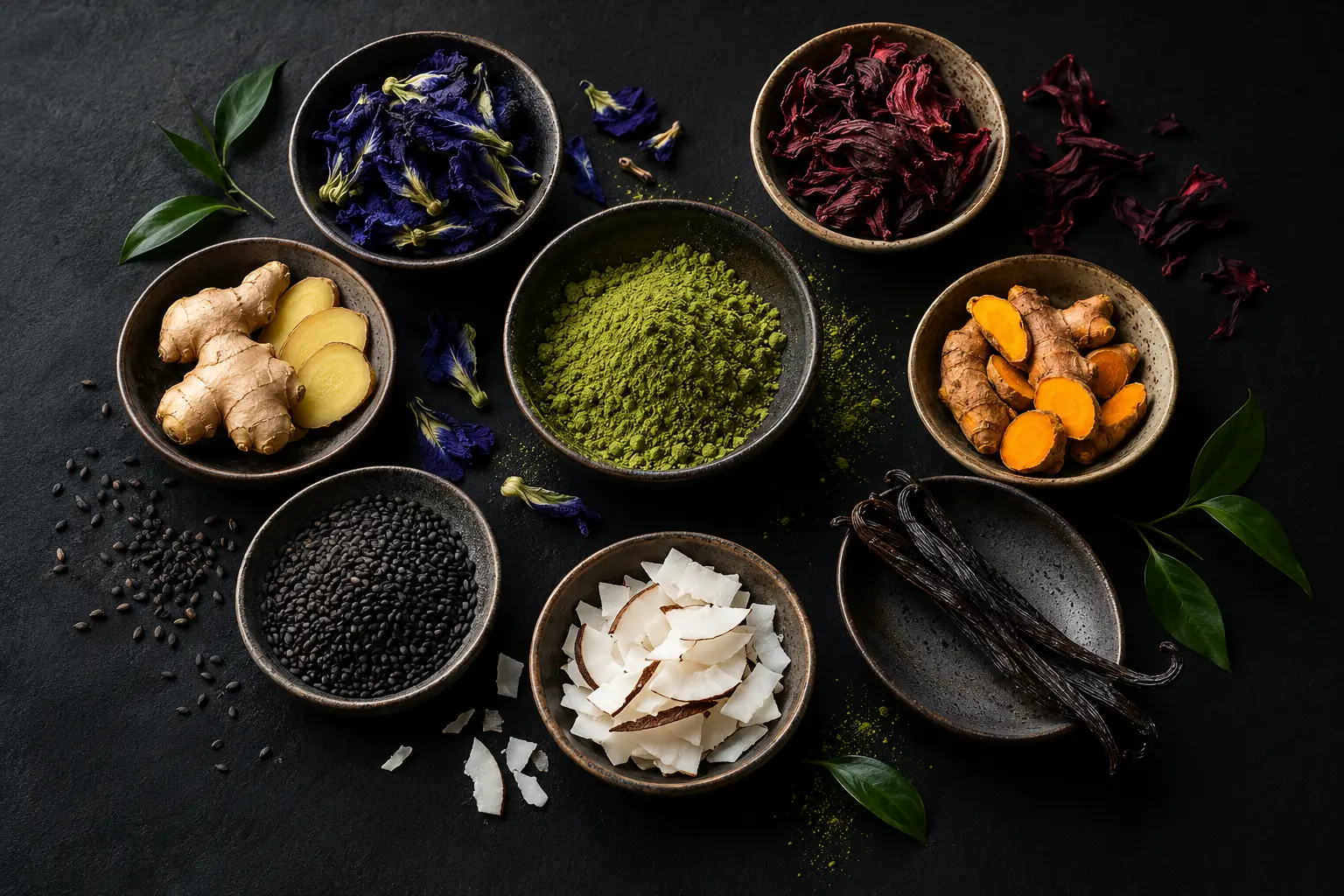
Change one component at a time and keep a short note about the result. This makes a recipe easier to repeat and helps distinguish a personal serving preference from a general claim about an ingredient. A styled photograph is an illustration of a recipe direction, not an exact specification.
Avoid a misleading shortcut
Keep the fruit origin and tea origin separate when explaining a blended product. A Sri Lankan tea base does not automatically identify every other ingredient’s cultivation origin.
The complete recipe matters. A botanical guide does not list every component of a blend, milk, syrup or topping. Use the final label and supplier information for ingredient, storage and allergen questions, especially when a drink is prepared for someone else.