
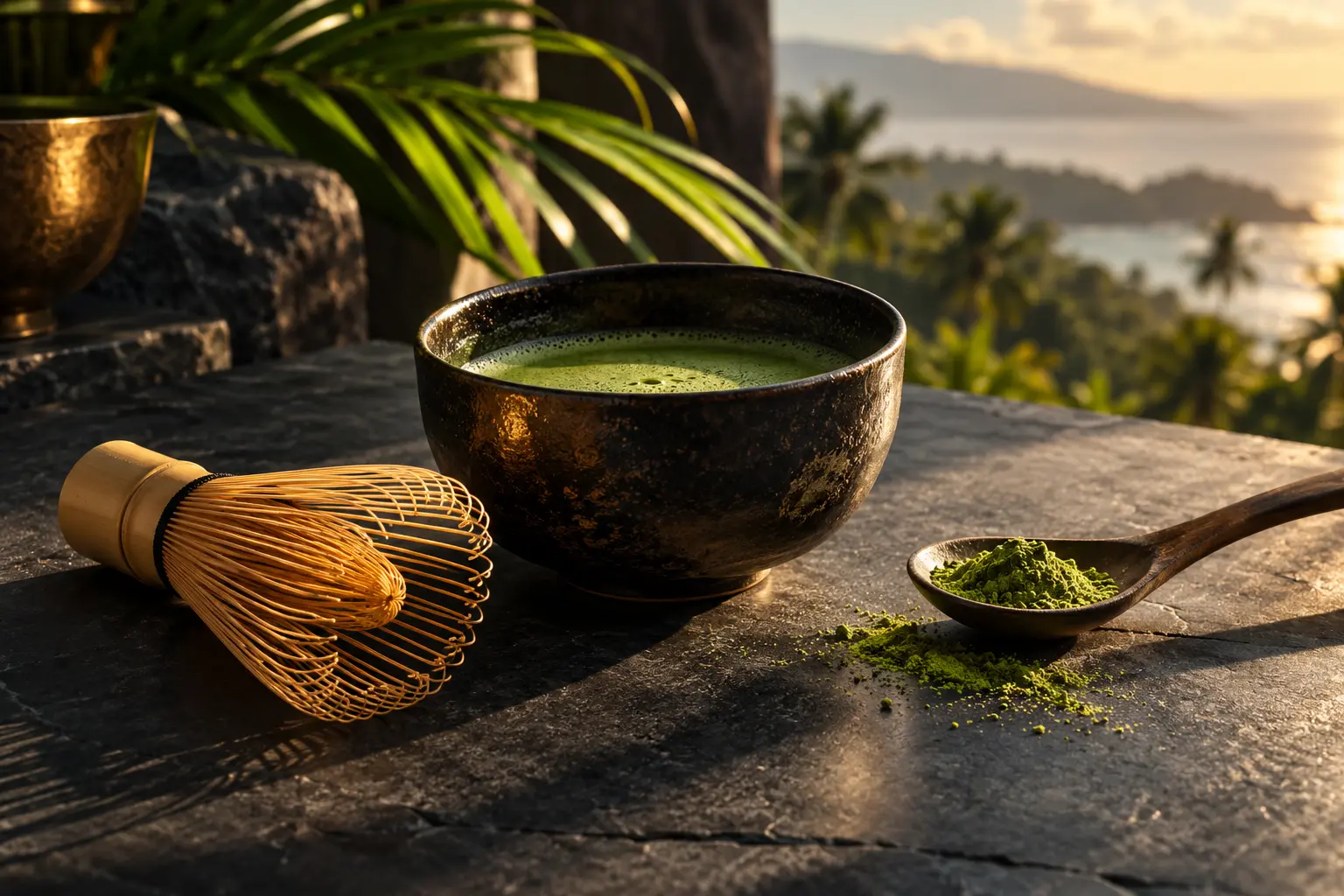
Start with 1–2 g plain matcha and 30–60 ml warm water. Sift, whisk until smooth, then add water or milk to taste. Use this as a starting point and follow the product label.
A simple method
- Measure the powder with a small scale if you have one.
- Sift into a dry bowl to break up clumps.
- Add a little warm water, around 70–80°C as a taste starting point.
- Whisk briskly with a loose M-shaped motion until evenly dispersed.
- Add more water or milk. Taste before adding sweetener.
Troubleshooting the cup
| Problem | Try this |
|---|---|
| Clumps | Sift first and make a small paste before adding the rest of the liquid |
| Bitter taste | Reduce powder, use cooler water or shorten the warm holding time |
| Powder at the bottom | Stir again; a suspension naturally settles |
| No bamboo whisk | Use a milk frother in a deep cup or a tightly closed shaker with cool liquid |
For an iced drink
Mix the powder with a small amount of warm water first, then let the concentrate cool slightly and pour over milk and ice. Never shake hot liquid in a sealed jar.
Set up a repeatable work surface
Prepare a clean, dry bowl or deep cup, a measuring tool, your chosen mixing tool and the liquids you intend to use. Put the powder away after measuring rather than leaving the open pack beside steam. A small scale is useful when you want to repeat a drink accurately; a spoon can be convenient, but its fill level and shape make it a less precise reference.
The basic sequence is measure, sift, mix a concentrate, then dilute. This lets you spot clumps before they disappear under a large volume of milk. Do not judge the drink only by its surface foam. Check whether the texture feels even and whether the strength suits you. The finished product label takes priority over a general starting method, particularly for blends with additional ingredients.
Adjust strength with one variable
If the first cup tastes too strong, keep the powder amount the same and add a little more liquid. If it is too weak, record that result and adjust the dose in a fresh preparation. Repeatedly adding dry powder to a finished latte makes it harder to compare texture and can create new clumps.
Temperature is another variable, not a badge of quality. Use the starting temperature in your preparation instructions, taste at a comfortable drinking temperature and make small changes. Avoid a routine where the powder sits in hot liquid for a long time before service. For an iced drink, prepare the concentrate first, then combine it with cold milk or water and ice.
Whisk, frother or shaker
A bamboo whisk gives you control over motion in a broad bowl. A small electric frother can be useful in a deep vessel where splashes are contained. A shaker works with cool liquid and needs a secure, food-safe closure. These tools produce different foam and texture, so keep the tool consistent when comparing recipes.
Do not seal hot liquid in a jar or shaker. For warm preparation, use an open vessel and an appropriate tool. For cold preparation, close the shaker securely, mix, then check for unmixed pockets. Clean the mixing tool and vessel after use and keep the preparation area separate from an open powder pack.
A preparation record for a better second cup
Write down the tea or blend name, powder weight, concentrate liquid, final liquid, milk choice and whether the drink is hot or iced. Add a short observation such as too strong, uneven texture or preferred without sweetener. That note is more useful than remembering that yesterday’s drink was nice.
For a team, use the same record as a simple recipe card. Specify the vessel and tools, not only the ingredients. Keep the label information available for caffeine and allergen questions. Recipe changes should be intentional: changing a milk brand or a botanical powder can alter both texture and the information staff need to give a customer.
Continue exploring
Questions, answered
Do I need special tools?
A bamboo whisk is useful, but a small frother or shaker can work. A scale helps you repeat a serving you enjoy.
Practical reference
Marukyu Koyamaen: matcha preparation guidance
Independent producer guidance on general tea preparation and storage. It does not describe MATCHA’s production process or establish a supplier relationship.