
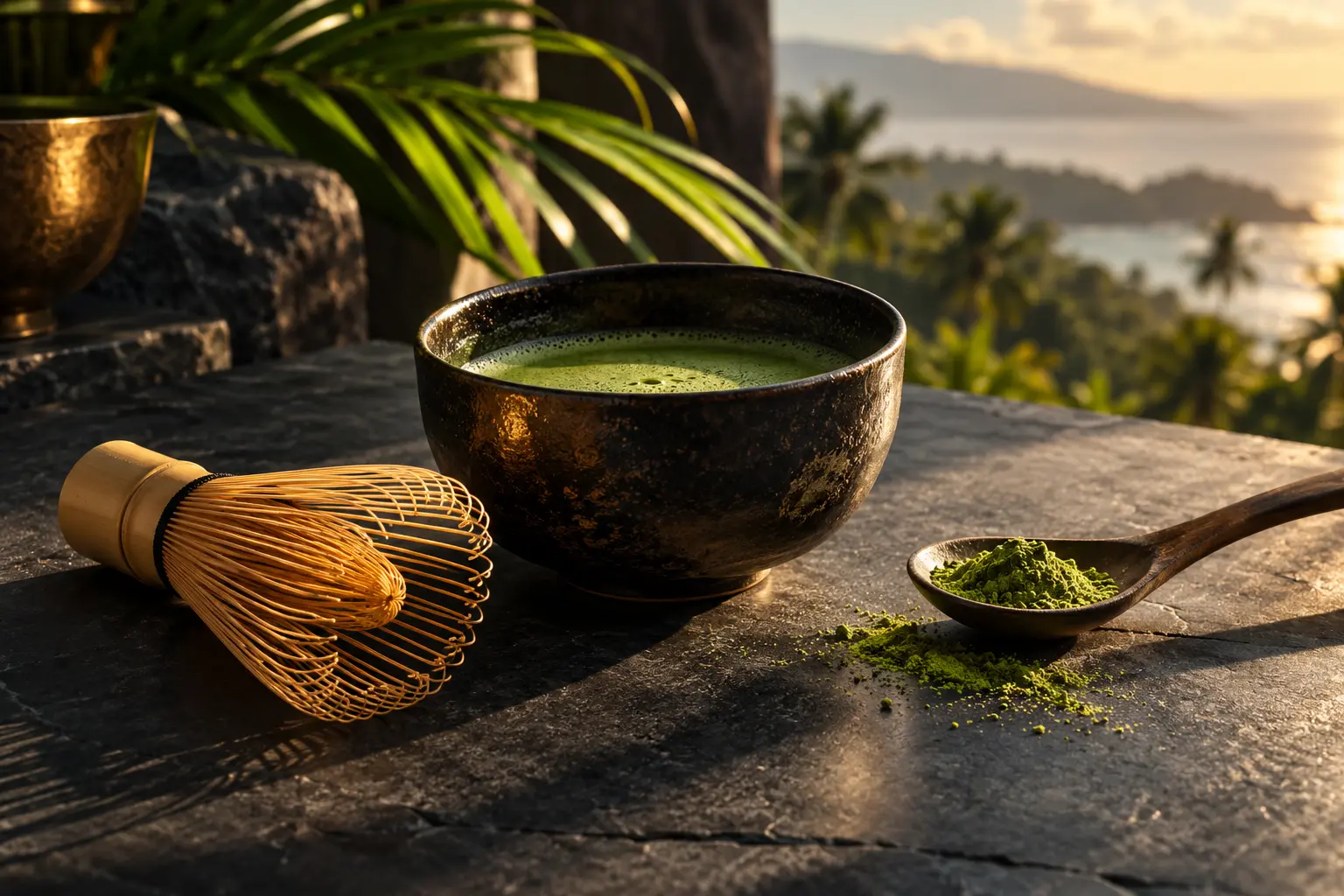
Matcha is a food and beverage ingredient. Research on green tea or matcha does not establish that a particular serving or blend prevents or treats a condition.
Composition is not a clinical result
Tea composition studies and health studies answer different questions. Finding compounds in tea does not prove a specific outcome in a person. Human studies, serving details and the quality of the evidence matter.
Claims we do not make
- No guaranteed weight loss or detox effect
- No promise to treat anxiety, diabetes or another condition
- No claim that botanical colours create a proven benefit
- No invented clinical trials or customer health testimonials
A practical reason to enjoy it
Taste, preparation and a ritual you enjoy are enough reasons to choose a drink. Check caffeine, added ingredients and your own tolerance. Concentrated supplements and a normal tea drink should not be treated as interchangeable.
Separate ingredient research from a finished-product promise
A study about green tea, an extract or a particular preparation answers a defined research question. It does not automatically establish an outcome for a MATCHA latte or botanical blend. Check what was studied, who took part, how much was used and how the outcome was measured before applying a headline to an everyday drink.
NCCIH notes that conclusions remain uncertain for many promoted uses of green tea, and that studies often involve extracts rather than the beverage itself. This is why our brand content does not promise disease prevention, guaranteed weight loss or a detox result. Those claims would require evidence beyond a general ingredient description.
Understand different levels of evidence
Composition information tells you what was measured in a sample. Laboratory research can explore a mechanism under defined conditions. A study involving people asks a different question, and its design, comparison group and relevance to the intended serving matter. A research review helps readers see a wider body of work, but it is not the same as testing a particular product.
When reading an article, look for a clear connection between the claim and the evidence. If a story jumps from a compound found in tea to a guaranteed personal benefit, that connection needs scrutiny. An attractive infographic or a list of references cannot fill a missing step in the argument.
Evaluate the complete drink
A plain tea preparation, a milk drink and a sweetened dessert have different recipes. Consider the actual ingredients and serving rather than assigning one wellness label to everything containing matcha. Added syrup, milk choice and recipe size belong in the description if they matter to the question being asked.
Taste, convenience and a ritual you enjoy are valid reasons to make a drink. You do not need a therapeutic claim to justify choosing it. The useful information is clear: what is in the recipe, how to prepare it, whether it contains tea and which ingredient labels you should check.
Questions worth asking about a health headline
Ask whether the source describes ordinary tea or a concentrated supplement. Ask whether the result is an association or an intervention study. Ask whether the serving resembles the drink you intend to make. Then check whether the article describes limitations alongside the headline.
For decisions connected to a medical condition, treatment, pregnancy or medication, use appropriate professional advice. This page is general editorial education. It does not prescribe a dose or attach a clinical outcome to the MATCHA collection. Product testing, if published, will also need to be interpreted according to what it actually measured.
Sources & further reading
Source review: 12 October 2026. External publishers are independent of MATCHA. Sources support the specific editorial statements cited.
Continue exploring
Questions, answered
Is more matcha always better?
No. More powder changes the serving, caffeine and taste. Follow the product instructions and consider your own tolerance.