
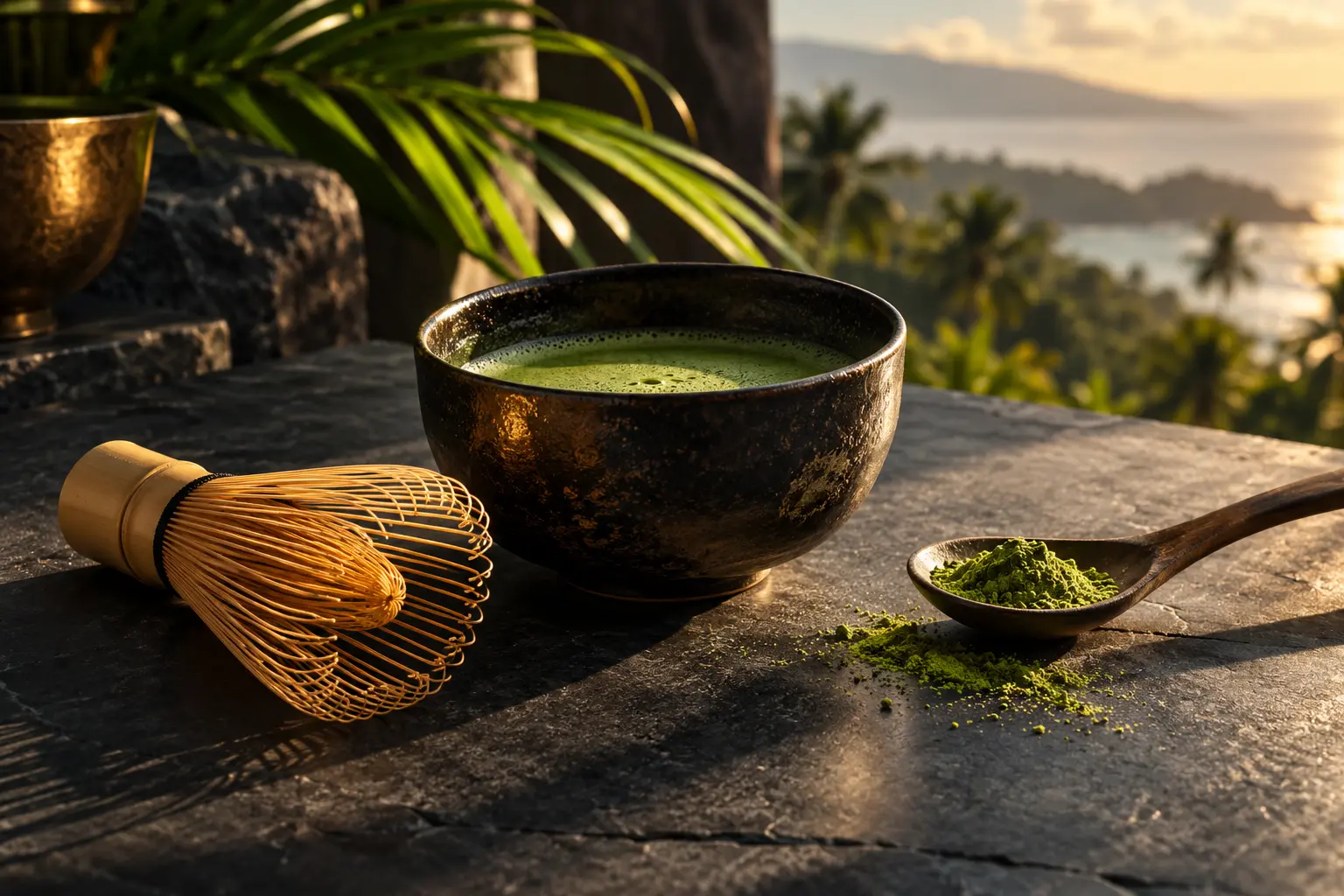
Both green tea and coffee can contain caffeine. Compare a measured serving of each product; grams of powder, preparation and the actual product affect the result.
Compare the serving, not the name
| Factor | Why it matters |
|---|---|
| Powder amount | A larger tea portion generally changes the caffeine dose |
| Blend composition | Botanical ingredients alter the proportion of tea |
| Coffee recipe | Bean dose, brewing method and cup size vary |
| Evidence | A batch test or reliable product specification supports an exact number |
No published MATCHA caffeine test
We have not published a laboratory result for these blends. We therefore do not provide an exact caffeine amount or claim that a coloured blend is suitable for evening use.
Personal tolerance
If caffeine affects your sleep or causes symptoms, consider your total intake and timing. For advice specific to pregnancy, medication or a health condition, consult an appropriate clinician. This guide does not provide a personalised intake limit.
Why cup-to-cup comparisons can mislead
A small cup is not necessarily a small caffeine serving, and a large latte is not necessarily a larger one. The amount of tea powder or coffee used and the product itself matter. Milk and ice change the final drink volume but do not, by themselves, establish the original caffeine amount.
Write down what you are comparing: powder weight or coffee dose, preparation, final cup size and the source of any caffeine figure. A number copied from a different product or serving should not be presented as a measured result for your drink. For the MATCHA collection, an exact product figure needs suitable finished-product information.
Tea blends and botanical-only drinks
Every current MATCHA blend direction includes a green tea base. A fruit, flower or spice name therefore does not make the range caffeine-free. The botanical-only recipes are labelled separately so visitors can distinguish them from the finished tea-containing blends.
This distinction is useful when planning a daily routine or writing a menu. Ask whether tea is present before asking how much caffeine a drink contains. Where an exact value is unavailable, a clear ingredient statement is more honest than a precise-looking estimate. Avoid describing an evening drink as suitable for everyone based only on its colour.
What research can and cannot answer for your cup
NCCIH identifies caffeine as a component of green tea. That establishes a general ingredient fact; it does not provide a laboratory result for every matcha blend or recipe. A product-level claim needs evidence relevant to that product and serving.
Your own response also cannot be predicted from a general comparison chart. We do not promise calm energy, no crash or a particular sleep outcome. If you need advice about caffeine because of pregnancy, medication or a health condition, ask an appropriate health professional about your circumstances. This article explains how to compare information, not a personal intake limit.
A practical information checklist
For a home drink, retain the label and record the amount of powder you use. For a menu, keep the serving specification and the source of any stated caffeine value together. If the tea, blend ratio or recipe changes, review the information instead of carrying the old number forward automatically.
When no verified figure is available, describe the ingredient accurately. A statement that a drink contains green tea is useful. A decimal figure without a relevant source is not made reliable by adding it to a comparison table. Our quality guide explains how to read product and laboratory documents when exact measurements are needed.
Sources & further reading
Source review: 12 October 2026. External publishers are independent of MATCHA. Sources support the specific editorial statements cited.
Continue exploring
Questions, answered
Does matcha guarantee calm energy?
No. People respond differently to caffeine. We do not promise calmness, absence of a crash or a medical benefit from a product.