
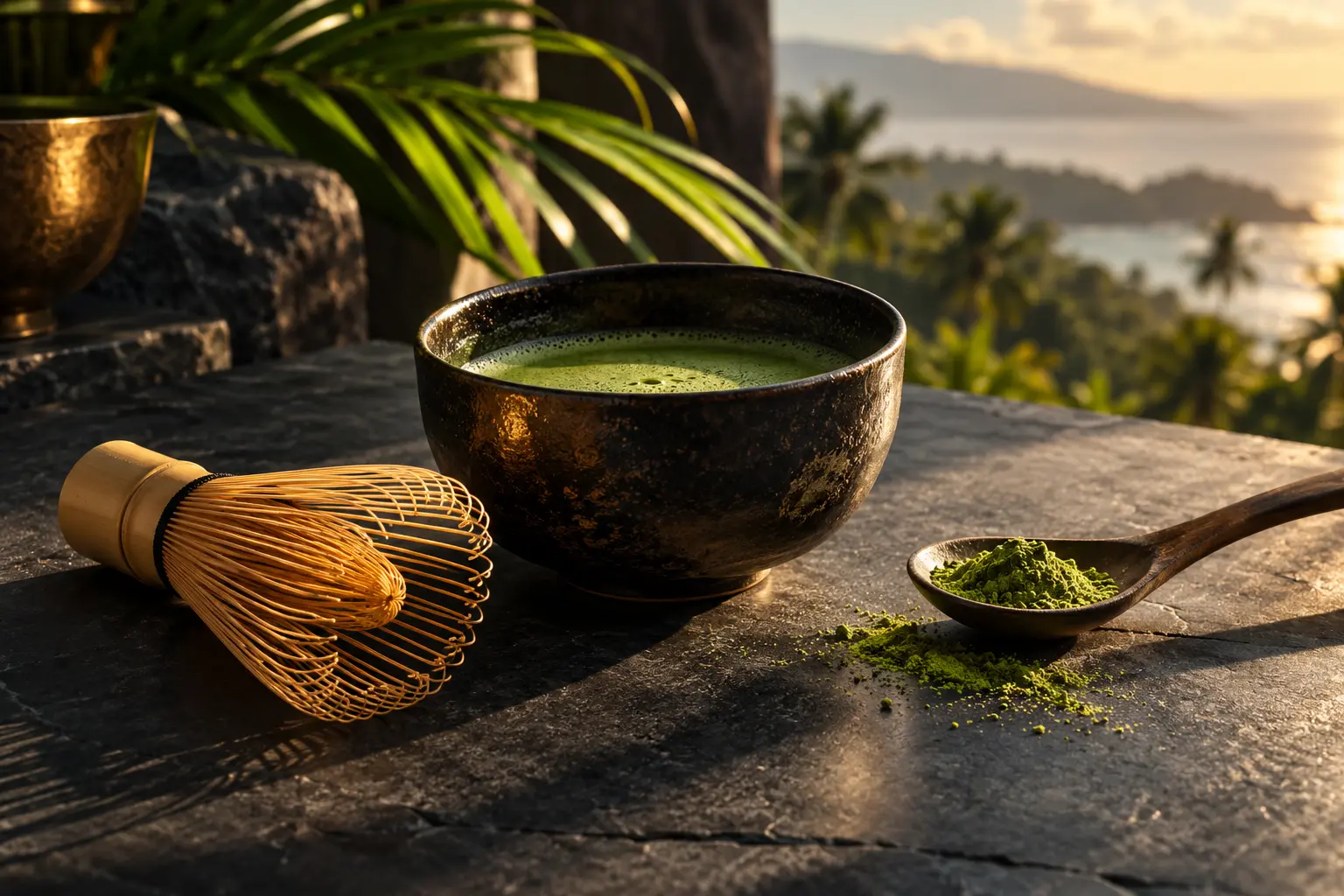
Matcha and brewed green tea are both tea preparations. The practical distinction is powdered leaf dispersed in the drink versus an infusion from leaves that are removed.
A useful comparison
| Question | Powdered tea | Brewed leaf tea |
|---|---|---|
| Preparation | Whisk or shake powder into liquid | Steep leaves, then remove them |
| Texture | Suspension; can settle | Usually a clear infusion |
| Portion | Measure grams of powder | Measure leaves and brewing water |
| Caffeine | Depends on powder and portion | Depends on tea and brewing method |
| Buying check | Origin, processing, freshness and ingredients | Origin, leaf style, freshness and brewing guidance |
Which should you choose?
Choose by the experience you enjoy. Powdered tea works well when you want a creamy latte or a culinary ingredient. Leaf tea suits an infusion ritual. Neither format automatically proves superior quality or a health outcome.
The distinction is the preparation
The everyday comparison is about what happens to the leaf. Brewed green tea is usually prepared by placing leaves in water and then removing them. A powdered tea drink keeps the dispersed powder in the cup. Both approaches can be enjoyable, but they create different routines: one involves controlling an infusion, while the other involves measuring and distributing a powder.
This is why a leaf-tea brewing instruction should not simply be copied onto a powder. Straining out a matcha preparation removes some of the material you intended to drink. Conversely, shaking whole leaves into milk will not create the same texture as a fine powder. Start with the preparation method intended for the product, then adjust taste within that method.
Compare a complete drink, not an ingredient name
A plain infusion, a plain powdered-tea preparation and a sweetened latte are three different drinks. Milk, syrup, fruit, serving size and the amount of tea can have a larger effect on the finished experience than the name on the menu. A comparison that calls every latte healthy or every infusion weak is not particularly useful.
Describe what you are comparing. For example: the same mug size, no added sweetener, and a recorded amount of powder or leaf. If you are comparing caffeine, use reliable product or batch information rather than assuming one universal number for each category. If you are comparing flavour, taste both drinks at a comfortable temperature and record the preparation.
Choosing for home, work or a menu
Choose powdered tea when your intended workflow includes whisked drinks, milk drinks or culinary recipes. Choose leaf tea when you prefer a steeping ritual and want to remove the leaf before serving. A small frother may suit a busy kitchen; a teapot and strainer may suit a slower table service. The useful choice depends on the drink you want to make and the tools you will actually use.
For a hospitality menu, record the method and train staff to follow it. A beautifully written tea description will not compensate for inconsistent portions, clumps or an unclear allergen answer. Keep the ingredient list beside the recipe specification and distinguish plain tea from blended or sweetened drinks.
Sources & further reading
Source review: 12 October 2026. External publishers are independent of MATCHA. Sources support the specific editorial statements cited.
Continue exploring
Questions, answered
Is green tea powder always matcha?
The term is used inconsistently. Ask the seller how the tea was cultivated and processed; finely milled tea alone does not establish a traditional production method.