
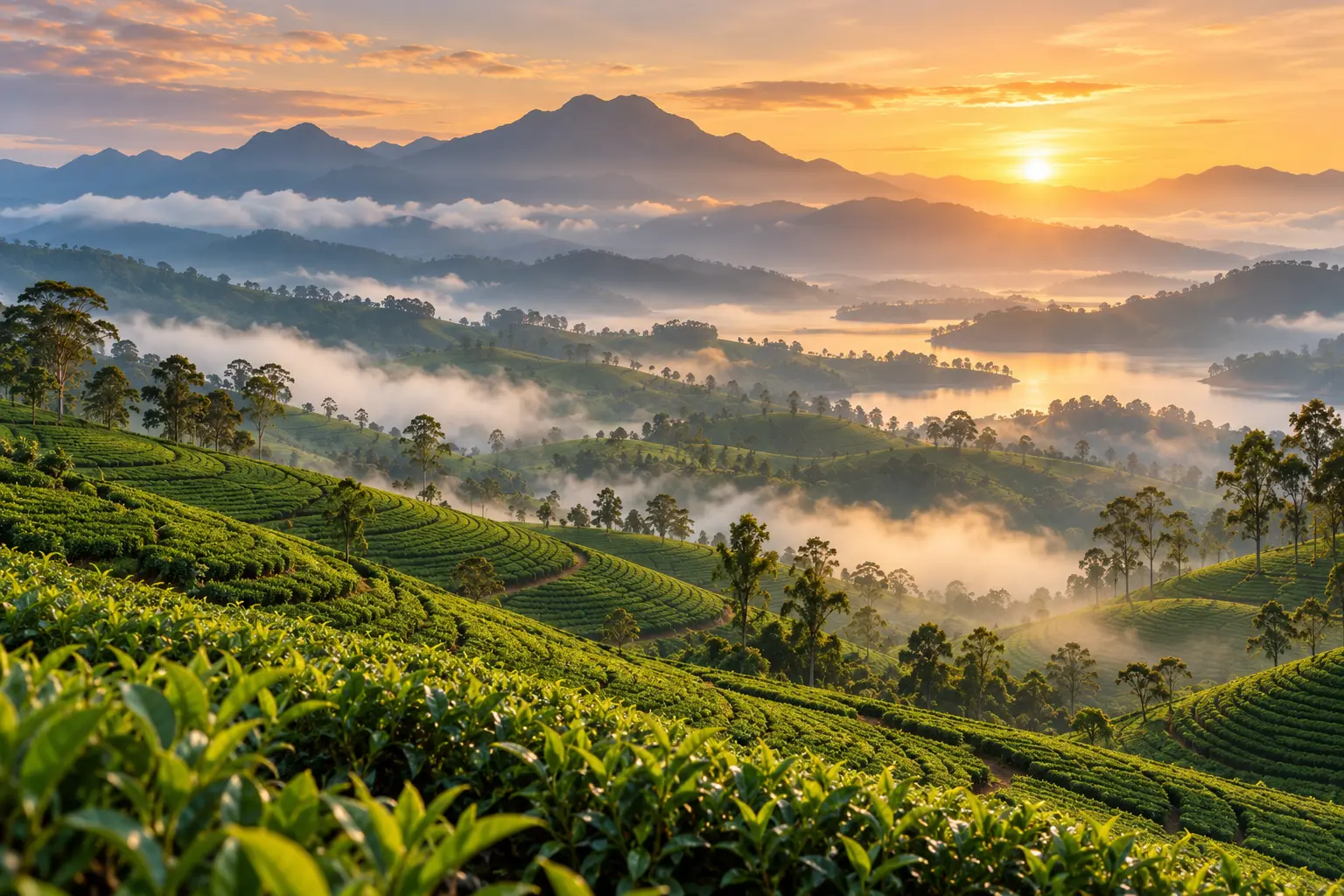
A Sri Lankan origin claim should refer to where the tea leaf was cultivated. It does not by itself establish a particular processing method, certification or grade.
Sri Lanka and tea
Sri Lanka has an established tea-growing industry across several recognised regions. The Sri Lanka Tea Board describes those regions. That context is not proof of the origin of any particular MATCHA batch.
Questions to ask a supplier
- Where was the tea cultivated?
- Who processed and milled it, and when?
- Can the lot be traced to supporting documents?
- Is the cultivation claim about tea leaf, every blend ingredient or only packing?
- What evidence supports certification and testing claims?
Our current disclosure
MATCHA is a Sri Lankan matcha brand preparing its collection for production. Our brand line is “100% Pure Matcha. Grown in Sri Lanka.” Production documentation will distinguish cultivation, processing, milling and packing, with batch-level information provided when available.
A useful way to understand Sri Lankan origin
Cultivation, processing, milling, blending and packing can take place in different locations. A clear origin explanation identifies which stage a geographic statement refers to. If tea was cultivated in Sri Lanka but a botanical ingredient came from elsewhere, those are separate ingredient facts. If a powder was packed locally, that does not automatically establish where its leaf was grown.
MATCHA’s identity is Sri Lankan, and its pure-product brand line is “100% Pure Matcha. Grown in Sri Lanka.” The useful next step is production information that connects the tea to a lot and its handling history. As the collection moves towards production, brand storytelling and technical documentation should support each other without treating a landscape illustration as a traceability record.
Tea heritage and product evidence
The Sri Lanka Tea Board identifies established tea-growing regions. That gives readers a geographic introduction to the island’s tea industry. It does not identify the cultivation source of every powder sold under a Sri Lankan name. A buyer should ask for the actual origin of the ingredient in the product being considered.
A useful record has a supplier identity, a description of the ingredient, dates or lot identifiers that can be connected to processing, and clear responsibility for the finished pack. For a blend, ask the same questions of the tea base and of any additional ingredient that is relevant to the origin statement. Keep the wording specific enough that a visitor can understand what has been established.
How to compare locally grown and imported tea
Start by asking whether the seller is describing cultivation or distribution. Then compare the intended use, ingredient list, pack size, batch information and storage. A local product and an imported product may be different options; neither should be selected only because its origin sounds more prestigious.
For a fair tasting comparison, prepare each product as instructed and record the portion. If you are choosing for milk drinks, compare with the same milk and final serving size. If you are choosing for plain tea, compare without syrup or botanical additions. Keep notes about your own result rather than turning a personal preference into a universal quality ranking.
Questions to take into a sourcing conversation
Ask which production facts can be shared publicly and which documents will accompany commercial supply. Request a connection between the pack label, the specification and the lot-level evidence. Clarify whether a stated certification belongs to the farm, processor, ingredient or finished product; those scopes are not interchangeable.
For our collection, launch and production details will be communicated as they become ready. This article explains how to interpret origin information. It does not name an unverified farm or claim an inspection that has not taken place. The goal is a Sri Lankan brand story that remains clear when a visitor asks practical questions about the product.
Sources & further reading
Source review: 12 October 2026. External publishers are independent of MATCHA. Sources support the specific editorial statements cited.
Continue exploring
Questions, answered
Does Ceylon mean matcha?
Ceylon is a geographic tea-origin designation associated with Sri Lanka. It does not alone describe powder processing, grade or a finished recipe.