
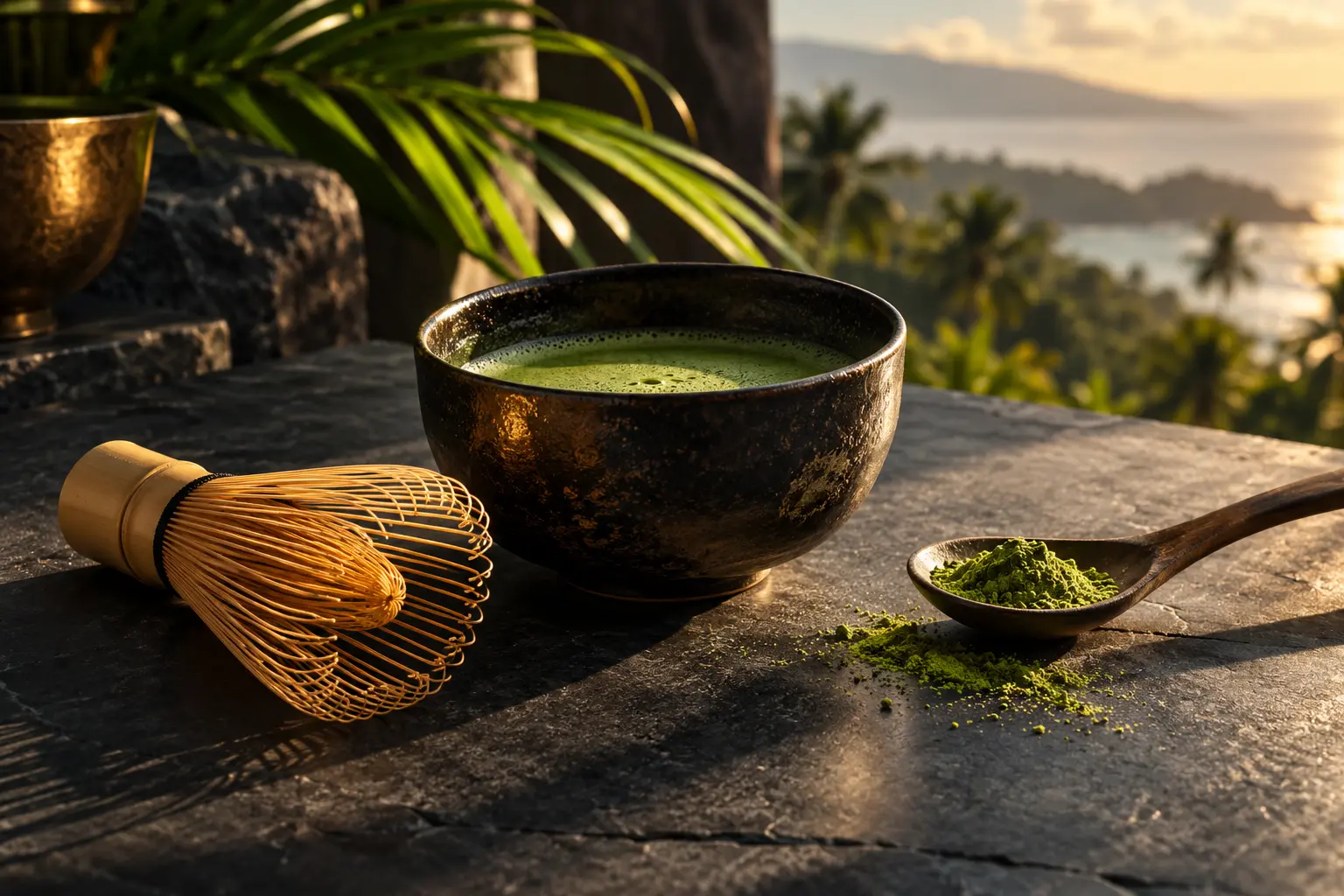
Keep matcha tightly closed in a cool, dry place away from light. Follow the producer’s storage instructions and use a clean, dry spoon.
A repeatable storage routine
- Close the pack immediately after measuring.
- Keep the container away from steam and the kettle.
- Avoid leaving powder in direct sunlight or a hot vehicle.
- If the label advises refrigeration, let the sealed pack acclimatise before opening to reduce condensation.
- Record the opening date and follow the stated shelf life.
Refill carefully
A refill tin should be clean and fully dry. Do not mix a new lot into old residue without checking freshness and traceability. Keep the original lot number and best-before information.
Create an opening routine
Set up a place for the pack before you open it. A dry cupboard away from heat and direct light is a more deliberate choice than an open shelf beside a kettle. Read the producer’s instructions, record the opening date if useful and close the pack after measuring. The simple objective is to avoid leaving powder exposed while you prepare the drink.
Use a clean, dry spoon. Do not move a wet mixing tool between a bowl and the powder container. If powder is transferred to another container, keep the product name, lot and date information with it. A neat unlabelled tin may look attractive on a counter, but it makes it harder to answer freshness and ingredient questions later.
Refill without losing the product information
Keep the original refill label until the contents have been used. Check that the receiving tin is clean and fully dry. Avoid mixing a new lot into old residue as a routine shortcut; using a consistent lot makes freshness and traceability easier to manage. Do not assume that a decorative tin is suitable for food storage unless its intended use is clear.
For a team, assign responsibility for opening, transferring and closing packs. Record the lot and date on a simple container label. If the product label has a different instruction from your usual storage routine, follow the product instruction. The same principles apply to a tea base and to a botanical blend, although their final specifications may differ.
Think about the climate around the pack
Humidity matters operationally because a pack may be opened near steam, condensation or a damp preparation surface. In a Sri Lankan kitchen or service area, consider the actual location: an air-conditioned room, a busy bar and a hot vehicle are different environments. Do not use a generic country label as a substitute for observing your storage conditions.
If a producer advises refrigeration, account for condensation when handling the sealed container. Follow the instructions for acclimatising and opening the pack. We do not publish one universal storage temperature or shelf life for every MATCHA blend; that information belongs on the finished label and specification.
Know when a pack needs a closer check
Check the label date, packaging condition and your handling history before relying on an opened pack. Visible moisture, a damaged closure or unclear identification is a reason to stop and investigate, rather than cover the issue with a stronger recipe. Colour and aroma can inform a quality observation but cannot establish every safety question.
A practical buying habit is to choose pack sizes around your realistic use. Keep the 50 g tin, 100 g refill and portion format distinct when planning storage. The smallest pack is not always the right choice for a busy team, and the largest is not always right for an occasional home drinker. Match the format to the routine you can maintain.
Continue exploring
Questions, answered
How long does MATCHA last?
Follow the storage and best-before information on the finished product label. Shelf life depends on the product, packaging and storage conditions.
Practical reference
Marukyu Koyamaen: tea storage guidance
Independent producer guidance on general tea preparation and storage. It does not describe MATCHA’s production process or establish a supplier relationship.