
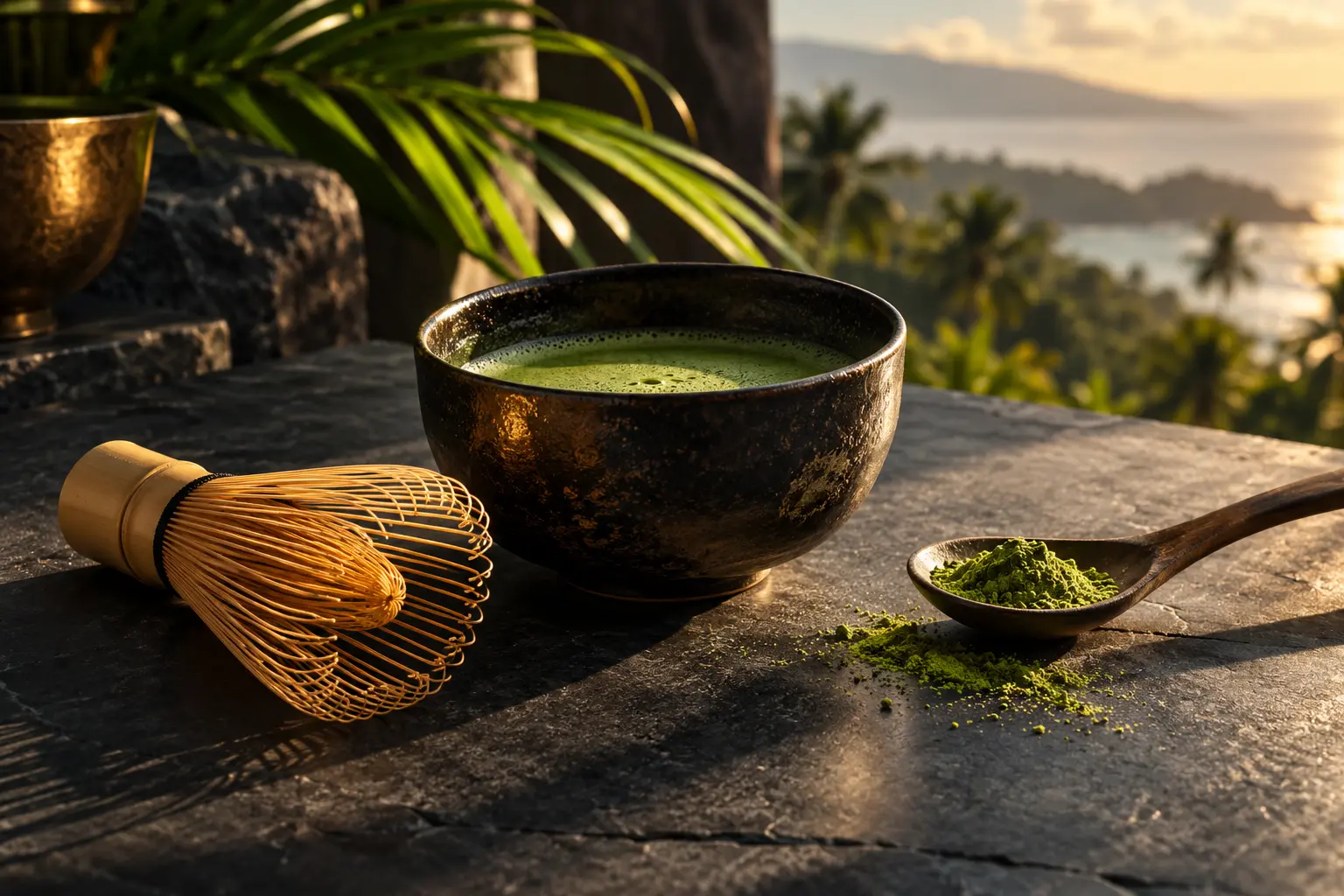
Matcha is a finely powdered green tea preparation. You drink the dispersed leaf powder, rather than removing brewed leaves. Powder alone does not prove a particular growing, processing or quality standard.
Powdered leaf, different ritual
A whisk or shaker disperses the powder in liquid. It is a suspension rather than a fully dissolved ingredient, so some settling is normal. An ordinary tea infusion extracts compounds into water and leaves the leaf behind.
What the label should explain
- Tea species and ingredient list
- Country of cultivation, separate from packing location
- Harvest or production date and batch identifier
- Processing description and storage instructions
- Supplier evidence supporting organic or quality claims
Pure tea versus botanical blends
Pure tea powder and tea blended with flowers, spices or fruit are different products. A blue or pink name does not show the amount of tea or establish caffeine content. Read the ingredient list and product specification.
What happens when powder meets water
The first useful distinction is between dissolving and dispersing. When you stir sugar into water, it dissolves. When you prepare powdered tea, small leaf particles are distributed through the liquid. Whisking makes that distribution more even and can introduce a fine layer of foam. A drink that settles after standing is therefore not automatically a defective product; stir it again before judging the texture.
This distinction explains several everyday preparation problems. Dry powder dropped straight into a full glass of milk can form pockets that are difficult to break apart. A small concentrate gives you more control: start with a measured portion, break up clumps and add the rest of your liquid gradually. The aim is a repeatable cup you enjoy, rather than the tallest possible foam.
Learn to read a matcha description
Three questions make a product description more useful: what is in it, where did the tea leaf grow, and what preparation does it suit? Pure tea and a fruit or botanical blend answer the first question differently. A Sri Lankan brand address does not, by itself, answer the second. A recommendation for a latte does not establish how a tea will taste when prepared only with water.
Look for specific information rather than treating words such as premium, original or ceremonial as complete specifications. A clear ingredient list helps you understand the tea base and any additions. A lot identifier connects the pack to production records. Storage instructions explain how the maker expects the pack to be handled. These details are useful whether you are trying one tin at home or preparing a hospitality purchase.
A first-cup learning exercise
Prepare a small plain-tea serving using the product instructions. Before adding anything else, notice aroma, texture and taste. Then add a little water and taste again. If you intend to make a latte, compare a small portion with your chosen milk. Write down the powder weight and liquid amounts so you can repeat your preferred result.
Change one variable at a time. If you change the tea dose, water temperature, milk and sweetener together, you will not know which adjustment helped. This simple method is also useful for choosing a botanical blend: establish a familiar preparation first, then compare the new ingredient direction. It is a personal tasting exercise, not a claim that MATCHA has conducted a blind tasting or laboratory study.
Where to go next
For a measured starting method, use our preparation guide. For a creamy drink, begin with the green matcha latte recipe. If you are comparing products in Sri Lanka, read the origin guide and the source-linked buying page. Each answers a different question, so you can move from understanding the ingredient to choosing and preparing it with less guesswork.
Sources & further reading
Source review: 12 October 2026. External publishers are independent of MATCHA. Sources support the specific editorial statements cited.
Continue exploring
Questions, answered
Does matcha contain caffeine?
Green tea contains caffeine. The quantity in a serving varies with the tea, amount of powder and finished blend. A colour name is not a caffeine measurement.