
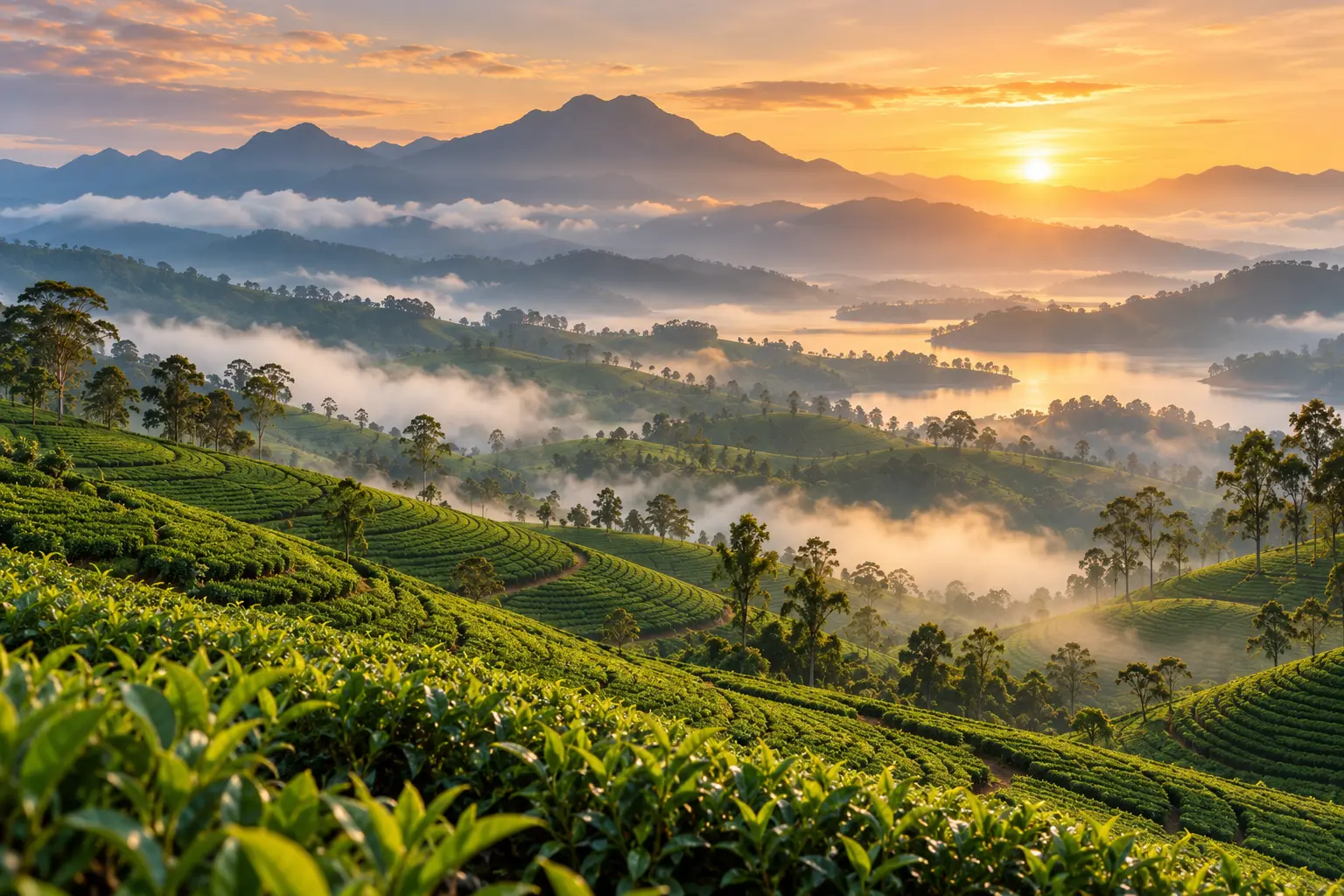
MATCHA is preparing its Sri Lankan matcha collection for production. Sourcing and batch information will be published as production documentation becomes available.
Current evidence status
| Information | Published status |
|---|---|
| Brand direction | Sri Lankan matcha brand |
| Named cultivation source | To be published with production documentation |
| Producer and milling records | To be published with production documentation |
| Batch-linked certificate of analysis | To be published with production documentation |
| Certification claims | No certification asserted by this site |
The evidence we need
- Cultivation origin and supplier identity authorised for publication
- Harvest, processing and milling information linked to a lot
- Ingredient specifications for every blend component
- Allergen and food-safety controls
- Relevant test reports, shelf-life evidence and final labels
Why the distinction matters
A beautiful tea landscape illustrates a place. It cannot document the origin of a tin. We will add producer and batch information when verified records are available, rather than infer it from a brand story.
A traceability record should connect the stages
A useful origin record connects tea cultivation, processing, milling and packing rather than treating them as one unnamed step. Where those stages have different responsible parties, the record should make that relationship understandable. The finished pack’s lot identifier is valuable because it can connect the visitor’s product to the relevant information.
For a blend, the tea base and added ingredients need their own descriptions. If an origin statement concerns only the tea, say so. Do not extend a geographic claim to fruit, flowers, spices or nuts without checking their records. This keeps a clear Sri Lankan tea identity compatible with accurate ingredient information.
What a supplier conversation should resolve
Ask which origin and production facts can be published, which specifications support the ingredient and which lot-level documents will accompany supply. Clarify the scope of any certification claim. A farm certificate, processing-site certificate and finished-product declaration may refer to different things.
Keep the agreed information together and review it when the specification changes. A quoted product, a sample and a later shipment should not quietly become three different descriptions. A photograph can support a presentation, but it is not a replacement for identifying the product and its responsible producer.
How origin information reaches the visitor
The most useful public explanation uses plain language: where the tea grew, which production stages are relevant and how the information connects to the pack. A visitor should not need to decode a marketing adjective to understand whether a statement is about cultivation, milling or local packing.
MATCHA’s production documentation will provide the appropriate detail as it becomes available for publication. The current sourcing page explains that structure and the information buyers should request. We keep the distinction between an editorial landscape and a documented cultivation source explicit.
Sources & further reading
Source review: 12 October 2026. External publishers are independent of MATCHA. Sources support the specific editorial statements cited.