
In the kitchen
Matcha products use powdered green tea. Cultivation origin, milling location and final packing location are separate facts. Request traceable records for each.
What to check
- Intended culinary use and actual ingredient form
- Complete ingredient list, including carriers or added sugar
- Lot number, date and storage guidance
- Origin evidence and relevant supplier testing
Label note
Tea adds caffeine; an exact amount requires a product specification or test.
In the MATCHA collection
This ingredient appears in the Pure blend. Refer to the finished product label for complete ingredient information.
Identify the ingredient you are actually using
Record where the leaf grew, who processed it and where it was milled. Those stages need not share one location. A packing address is useful contact information but does not replace the cultivation statement.
When asking a supplier a question, keep the ingredient name, form and lot together. A useful answer should refer to that exact product rather than to a general botanical description. Retain the pack information when an ingredient is transferred into a preparation container.
Build a clear recipe around it
Start by preparing a plain-tea reference. Record the powder amount, liquid and mixing tool. Use the same method when comparing another tea so that the preparation does not overwhelm the comparison.
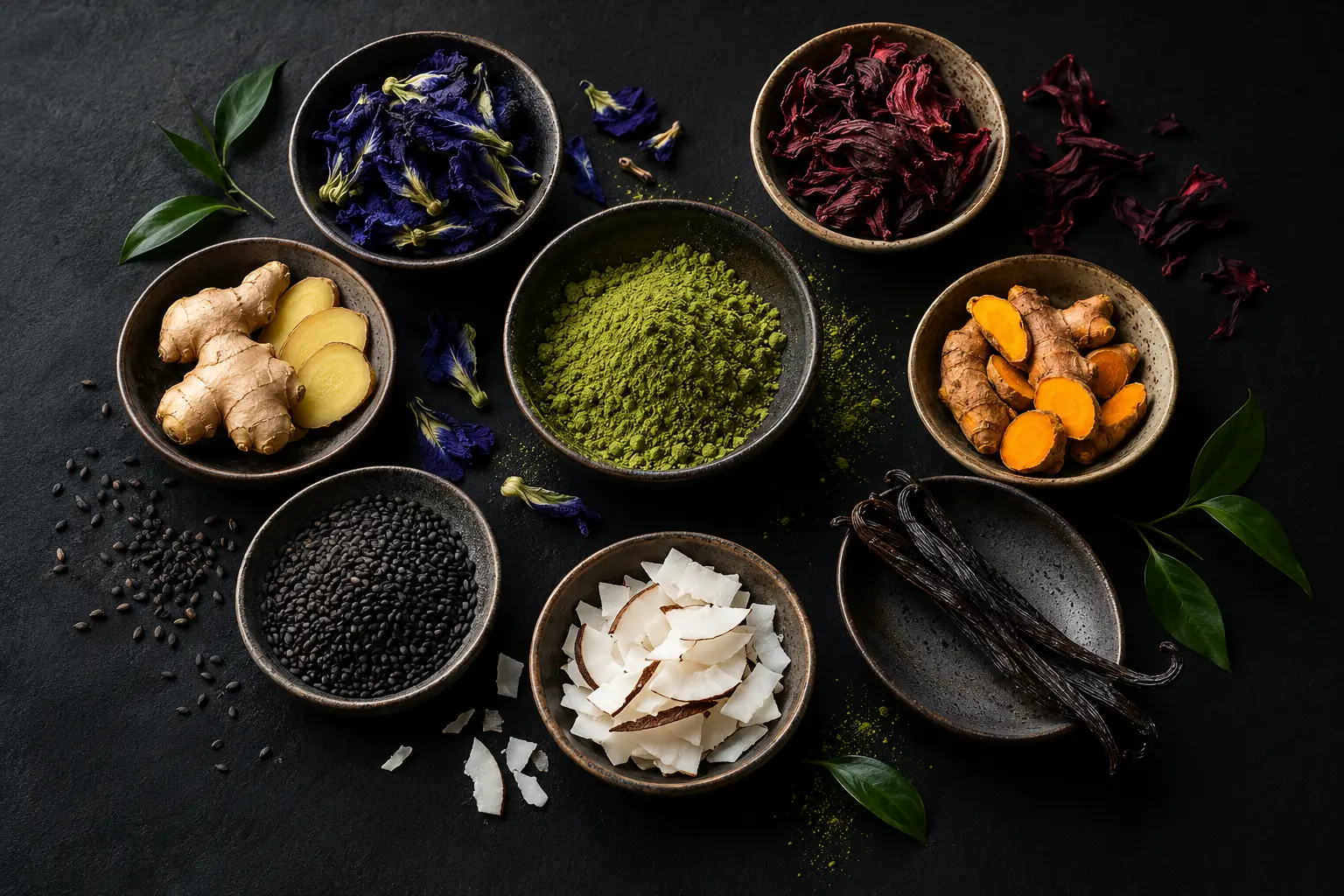
Change one component at a time and keep a short note about the result. This makes a recipe easier to repeat and helps distinguish a personal serving preference from a general claim about an ingredient. A styled photograph is an illustration of a recipe direction, not an exact specification.
Avoid a misleading shortcut
A tea-origin guide and a finished-product test report answer different questions. Keep the label, lot and supporting records connected.
The complete recipe matters. A botanical guide does not list every component of a blend, milk, syrup or topping. Use the final label and supplier information for ingredient, storage and allergen questions, especially when a drink is prepared for someone else.
Sources & further reading
Source review: 12 October 2026. External publishers are independent of MATCHA. Sources support the specific editorial statements cited.